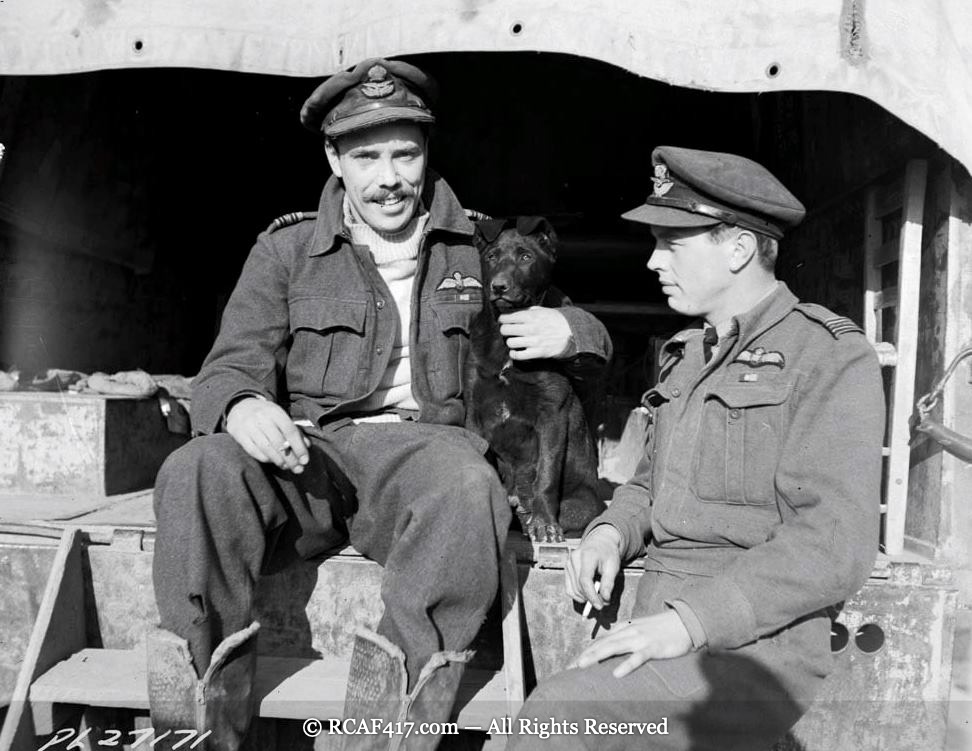
417 Squadron History
"City of Windsor" — Royal Canadian Air Force, 1941–1945
417 (Fighter) Squadron formed overseas and was ordered to the Middle East in the spring of 1942. Equipped first with Hurricanes and later Spitfires, it spent five months defending the Suez Canal and the Nile Delta. In April 1943 it became the only Canadian squadron in the Desert Air Force, providing air defence and close support to the British Eighth Army through the closing stages of the Tunisian campaign and throughout the Sicilian and Italian campaigns. The squadron was disbanded at Treviso, Italy, on June 30, 1945. Johnnie Koplitz joined the squadron on October 8, 1942 — his service is told chronologically in the chapters of this site; this page gives the fuller history of the unit he flew with. For every photograph of the aircraft themselves, see The Aircraft.
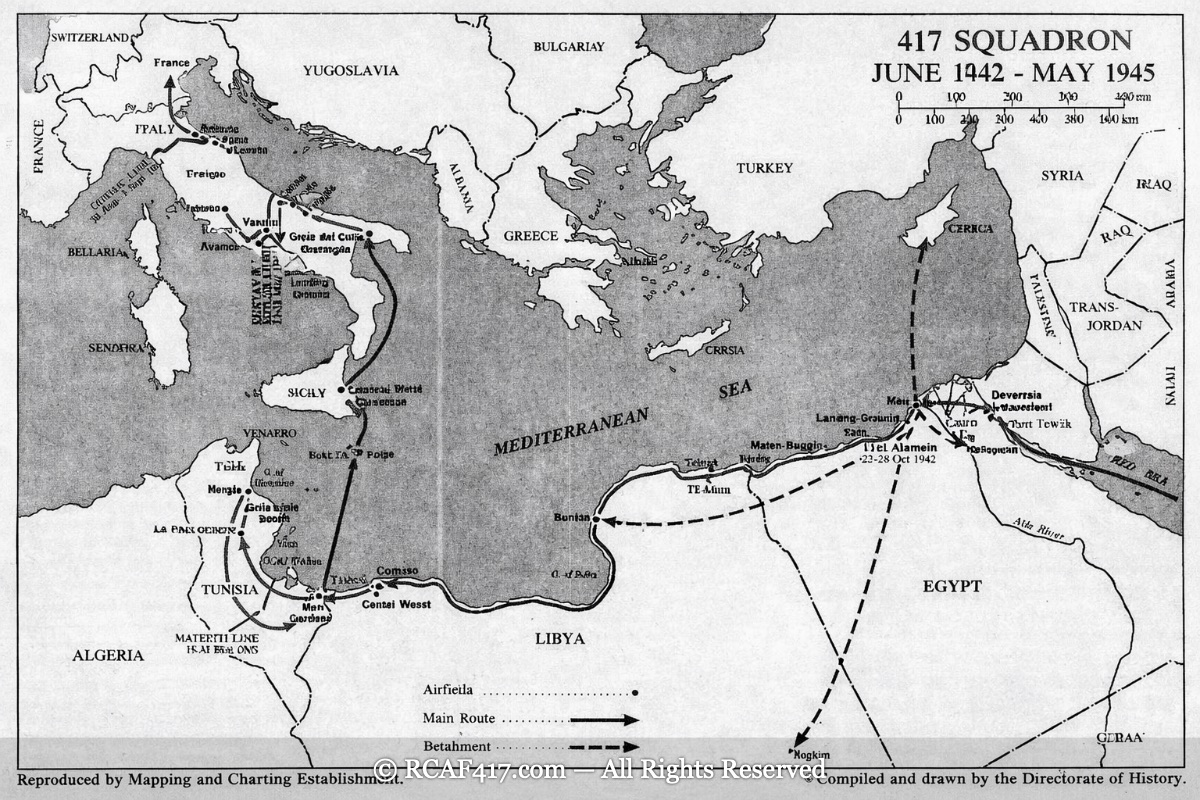
Formation & Movements
- Formed at Charmy Down, England, November 1941, as part of Fighter Command, flying Spitfire Mk IIs and then Spitfire Mk Vs.
- Transferred to Port Tewfik, Gulf of Suez, June 1942, as part of the Desert Air Force. No aircraft until September, when the squadron received Hurricane IICs, followed by Spitfire VBs and VCs in October.
- Transferred to Tripoli, Libya, in February 1943, with 244 Wing.
- Transferred to Ben Gardane, Tunisia, in March 1943; then to Mellaha and Goubrine.
- Transferred to Malta for Operation Husky, the invasion of Sicily, in mid-1943.
- Moved to Cassibile, south of Syracuse, Sicily, in July 1943; then to Lentini West and Gerbini. Re-equipped with Spitfire Mk VIIIs.
- Moved to Canne, Italy, November 1943, providing air cover for Ortona.
- Detached from the Desert Air Force in January 1944 and moved to Naples under US XIII Air Support Command to cover the bridgehead at Anzio. Picked up some Spitfire Mk IXs.
- Transferred to Venafro in April 1944 (near Monte Cassino).
- Trained to use 500-lb bombs from Spitfire Mk VIIIs in June 1944 and began operations as fighter-bombers — the shift to ground attack contributed to a six-fold increase in the monthly casualty rate.
- Moved to Littorio, Fabrica, and Perugia (north of Rome), July–August 1944.
- Moved to Loreto, south of Ancona, end of August 1944.
- Disbanded at Treviso, Italy, June 30, 1945.
Battle Honours
Defence of Britain 1942. Egypt and Libya 1942–1943. North Africa 1943. Sicily 1943. Italy 1943–1945: Salerno, Anzio and Nettuno, Gustav Line, Gothic Line.
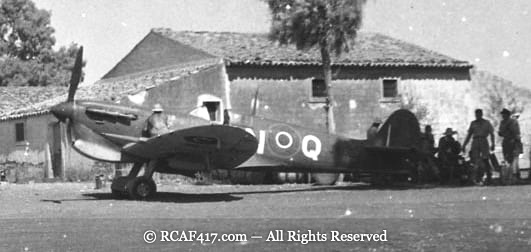
Aircraft
The squadron's unit code from 1940–1946 was AN.
| England | Spitfire Mk IIA & IIB (Nov 1941 – Feb 1942); Spitfire Mk VB (Feb – Mar 1942) |
|---|---|
| Middle East | Hurricane Mk IIB (Sep – Oct 1942); Hurricane Mk IIC (Sep 1942 – Jan 1943); Spitfire Mk VB & VC (Oct 1942 – Sep 1943); Spitfire Mk VIII (Aug 1943 – Apr 1945); Spitfire Mk IXB (Apr – Jun 1945) |
People
P/O John F. Koplitz
Joined the RCAF in 1941 and served with 417 Squadron before transferring to the USAAF. His full story is told on this site, chapter by chapter.
S/Ldr. Albert U. "Bert" Houle, DFC and Bar
Spent much of his operational career in the Middle East, Malta, Sicily, and Italy, ending on Spitfires as commanding officer of 417 Squadron. Remained in the RCAF until retirement with the rank of Group Captain. Credited with 7 kills while flying with 417.
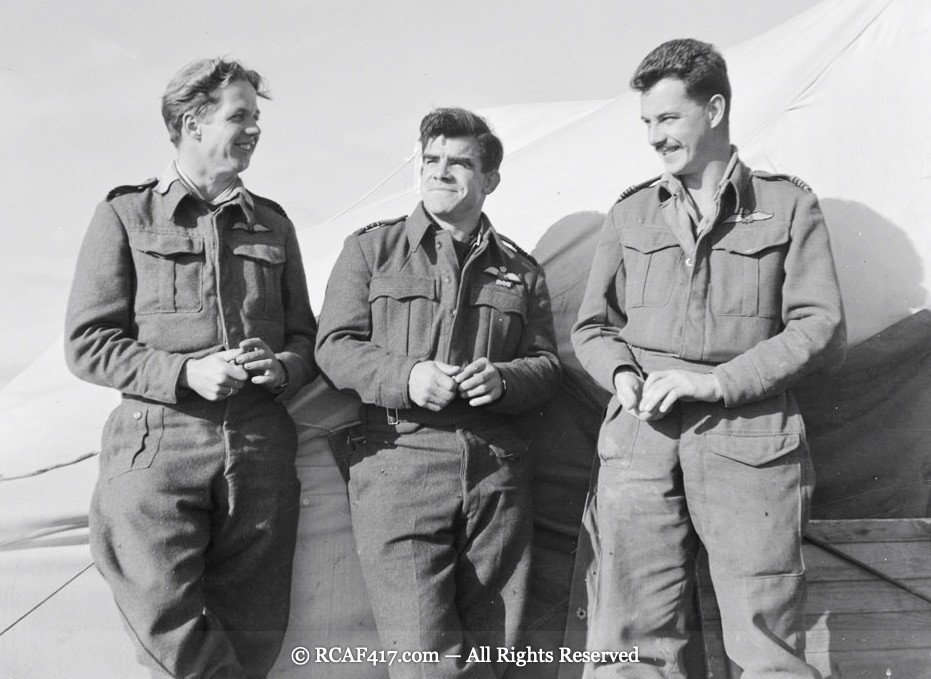
J.F. Edwards, DFM, DFC and Bar
Credited with 15 kills; listed by historian C. Shores in Aces High as one of the top-scoring Commonwealth pilots in the Mediterranean theatre, 1940–1945. He flew with RAF squadrons 94, 260, and 92, as well as time with 417.
S/Ldr. Hay and F/Lt. Turvey