Chapter Four

The Italian Campaign

Sicily, Italy, Corsica — 1943–1945

After his June 7, 1943 transfer from the RCAF, Koplitz joined the United States Army Air Forces under Army Serial Number O 394 182. He was assigned to the 57th Bomb Wing, 340th Bombardment Group, 489th Squadron — trading his Spitfire for a North American B-25 Mitchell medium bomber.
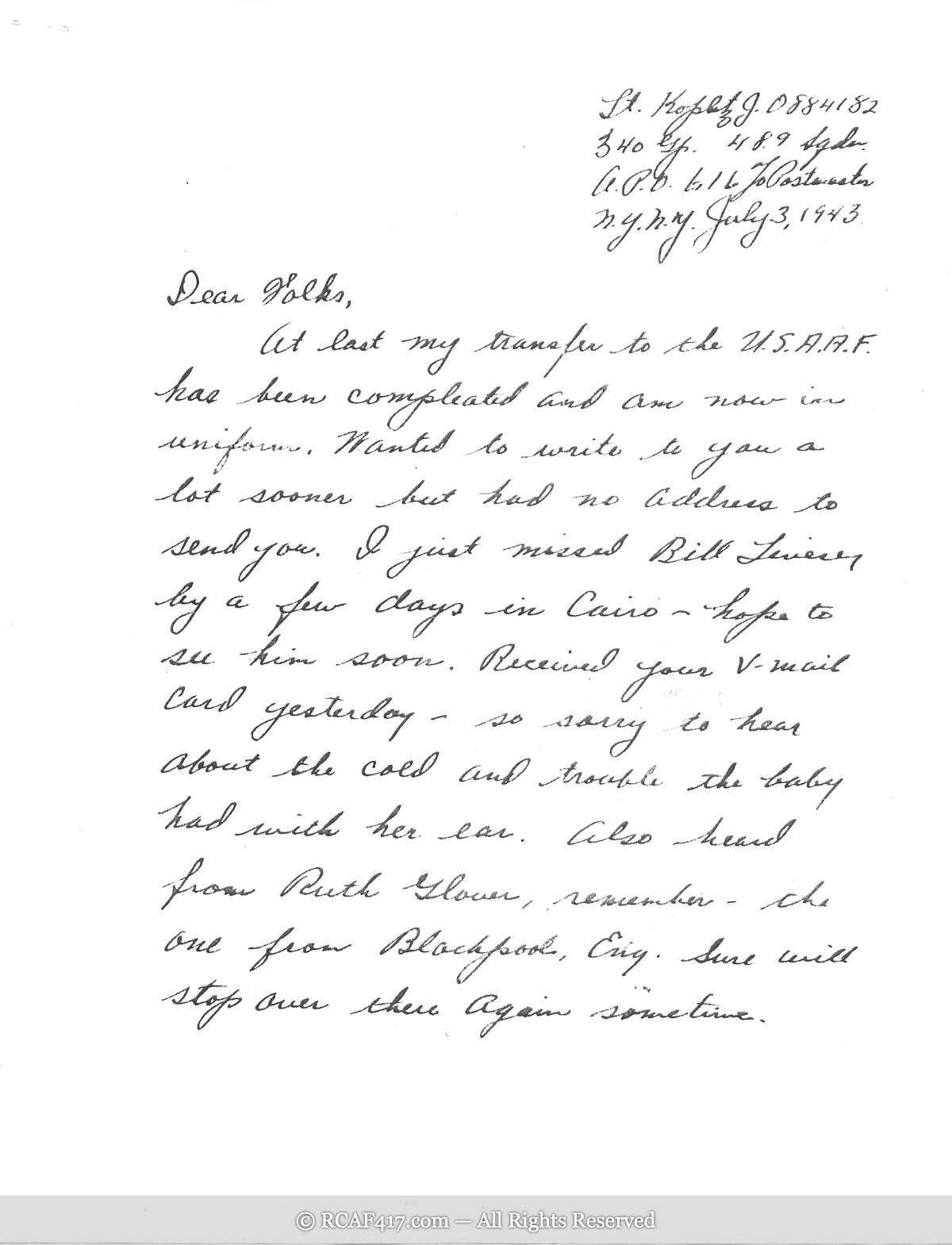
Handwritten letter from Lt. John Koplitz to his family, page 1, July 3, 1943
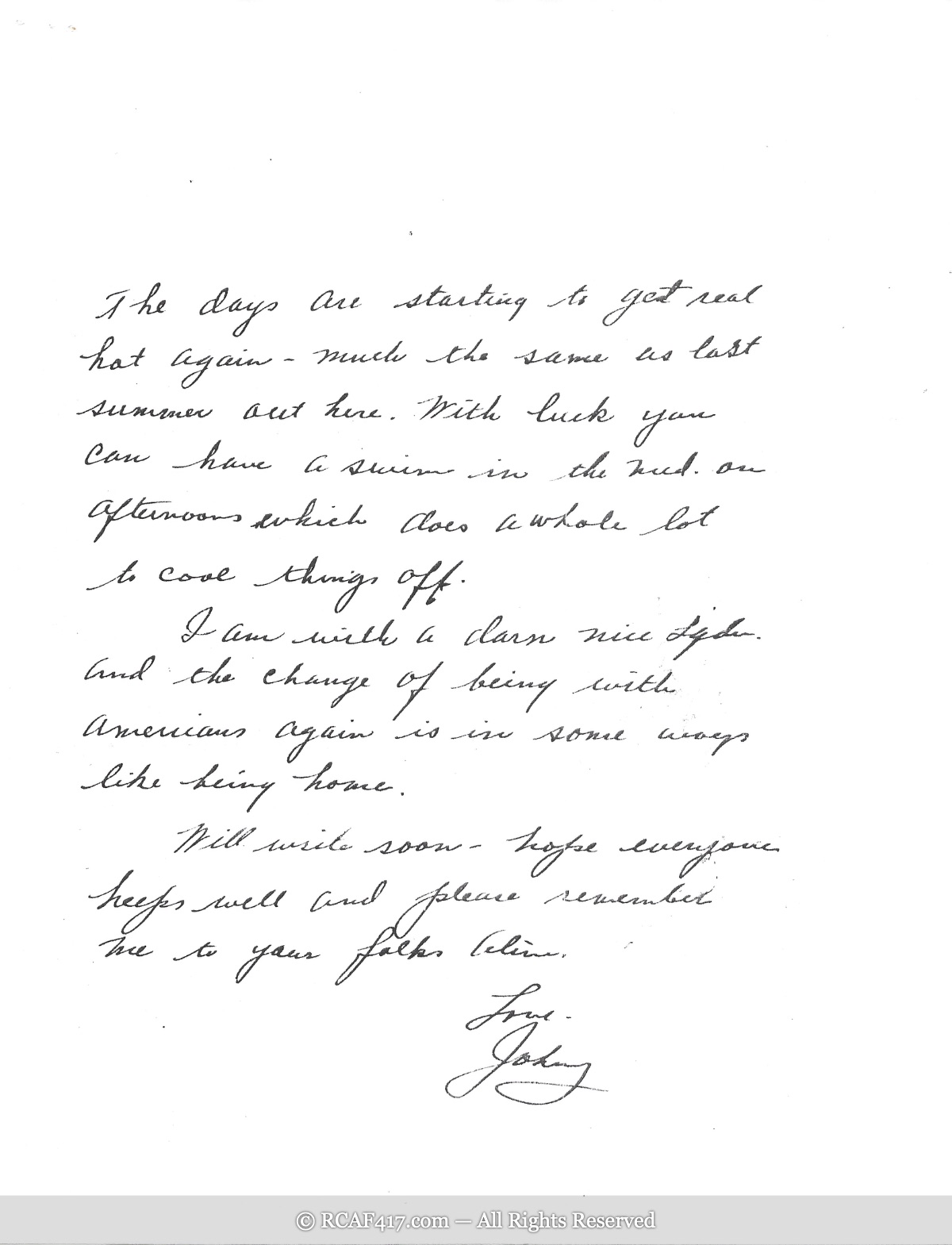
Handwritten letter from Lt. John Koplitz to his family, page 2, July 3, 1943
A letter home dated July 3, 1943 — less than a month after the transfer above — with a letterhead that puts his new unit beyond doubt: "Lt. Koplitz, J. ... 340 Gp. 489 Sqdn., A.P.O. 616 %Postmaster, N.Y.N.Y." He writes that his transfer to the USAAF "has been compleated and am now in uniform," that he'd just missed a friend, Bill Livesey (spelled "Levesey" in his own hand here — one more data point in the Livesey/Livsey spelling question raised elsewhere on this site), by a few days in Cairo, and mentions hearing from a Ruth Glover of Blackpool, England. He describes the heat, swimming in the Mediterranean on afternoons off, and being "with a darn nice bunch" — adding that "the change of being with Americans again is in some ways like being home." Signed "Love, Johnny." One more loose thread: the serial number on this letterhead reads as a third variant — "O884182" — adding to the O 394 182 / O 384 182 discrepancy already flagged on the service documents in Chapter Six; presented here rather than resolved.

In May 1943 he was promoted First Lieutenant. Flying out of bases across the Mediterranean theater, he flew missions over Sicily, Italy, and Corsica as the 340th Bomb Group supported the Allied advance up the Italian peninsula — patrol, interdiction, and escort duty that would eventually add up to more than 70 confirmed combat missions across his RCAF and USAAF service combined.

This was the theater where a V-mail letter home to his parents, dated March 12, 1943, was written — a brief, censored note of the kind airmen sent across the Atlantic during the war, preserved in the family archive along with his complete RCAF and USAAF service records.

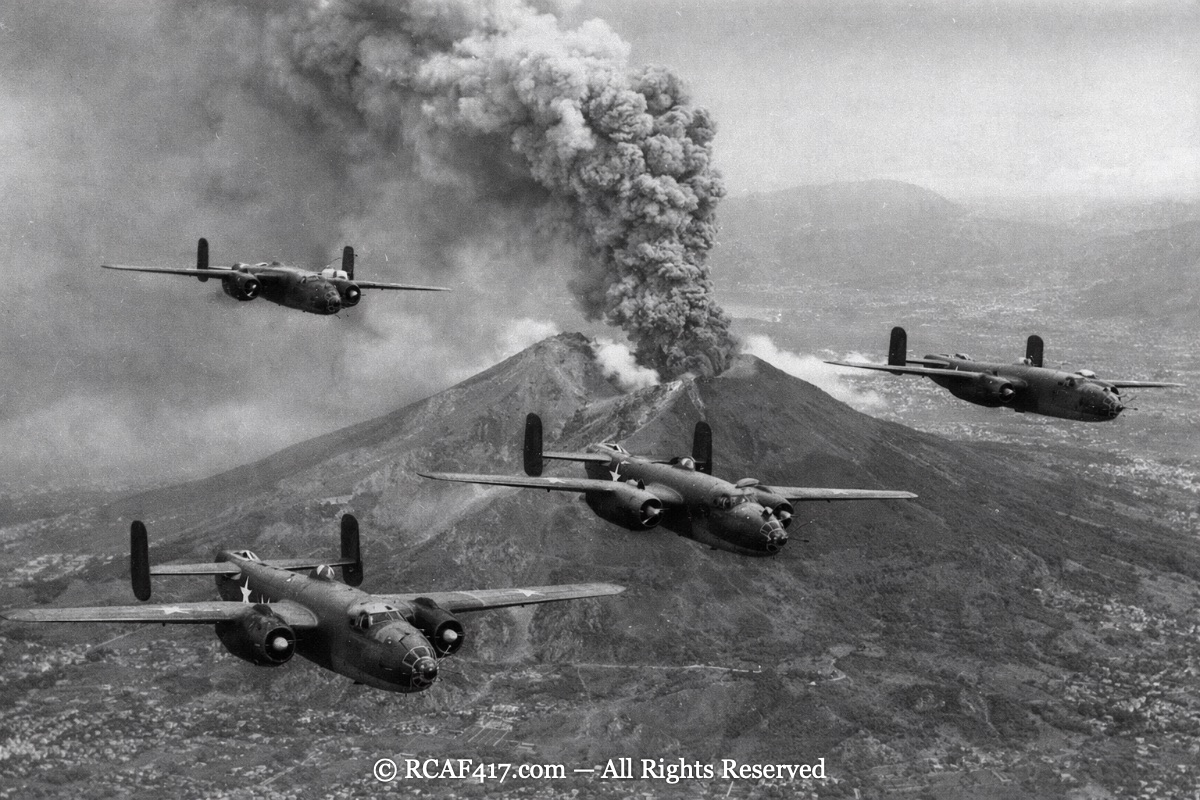
The 340th Bomb Group's own history includes a dramatic, well-documented episode: in March 1944, Mount Vesuvius erupted while the group was based at an airfield near Pompeii, close enough that falling ash reportedly damaged or destroyed a number of the group's B-25s on the ground. Two photographs from the family archive appear to bracket that event.
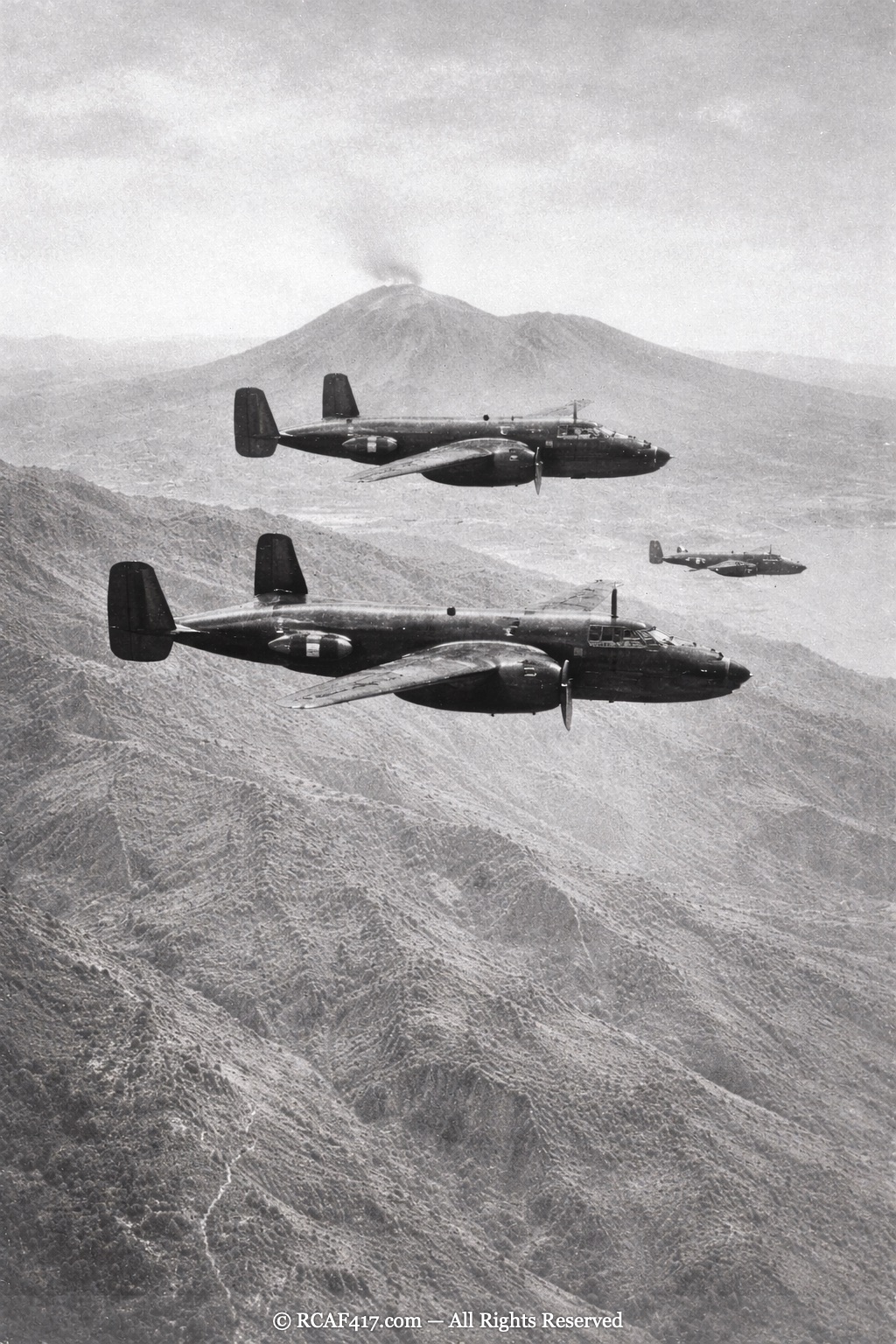
B-25 Mitchells in formation with Mount Vesuvius quiet in the background
A B-25 formation with Mount Vesuvius quiet behind them, just a thin wisp of vapor at the summit — almost certainly taken before the March 1944 eruption, for comparison with the photograph below.
Four B-25 Mitchells in formation with Mount Vesuvius erupting in the background
The same mountain, now venting a heavy column of ash, with four B-25s in formation across the frame — very likely taken during the March 1944 eruption itself. As with the photo above, this is presented as general 340th Bomb Group material rather than a confirmed record of Koplitz's own aircraft or a mission he personally flew.

The family archive also includes a large number of B-25 nose-art and crew photos, plus several official strike and reconnaissance prints, from the wider 340th Bomb Group — none confirmed as Koplitz's own aircraft, crew, or missions. Rather than crowd this chapter's confirmed, documented story with material that can't be tied to him directly, that collection now lives on its own Nose Art Archive page.

← Chapter Three: The Desert War Chapter Five: The Brenner Pass →