Life After the War
Florida & New Jersey, 1946–1968
Koplitz's discharge in January 1946 didn't take him out of aviation — it just moved him from the cockpit to the hangar floor. Over the next twenty-two years he built a career entirely within the industry he'd flown for during the war, working his way from a small machine shop of his own to a senior technical role at one of the country's major aircraft-engine manufacturers.
He started out on his own. From January 1946 to May 1950, he ran Siesta Sales, a self-employed machine and sheet metal shop in Sarasota, Florida, working under contract to rework military aircraft to meet FAA requirements for commercial licensing — practical, hands-on work converting wartime airframes for civilian use.
From there he moved into teaching: at Joiner and Johnston Aircraft Inc. (May 1950 – January 1952), he instructed both military and civilian personnel in the overhaul of aircraft and aircraft engines.
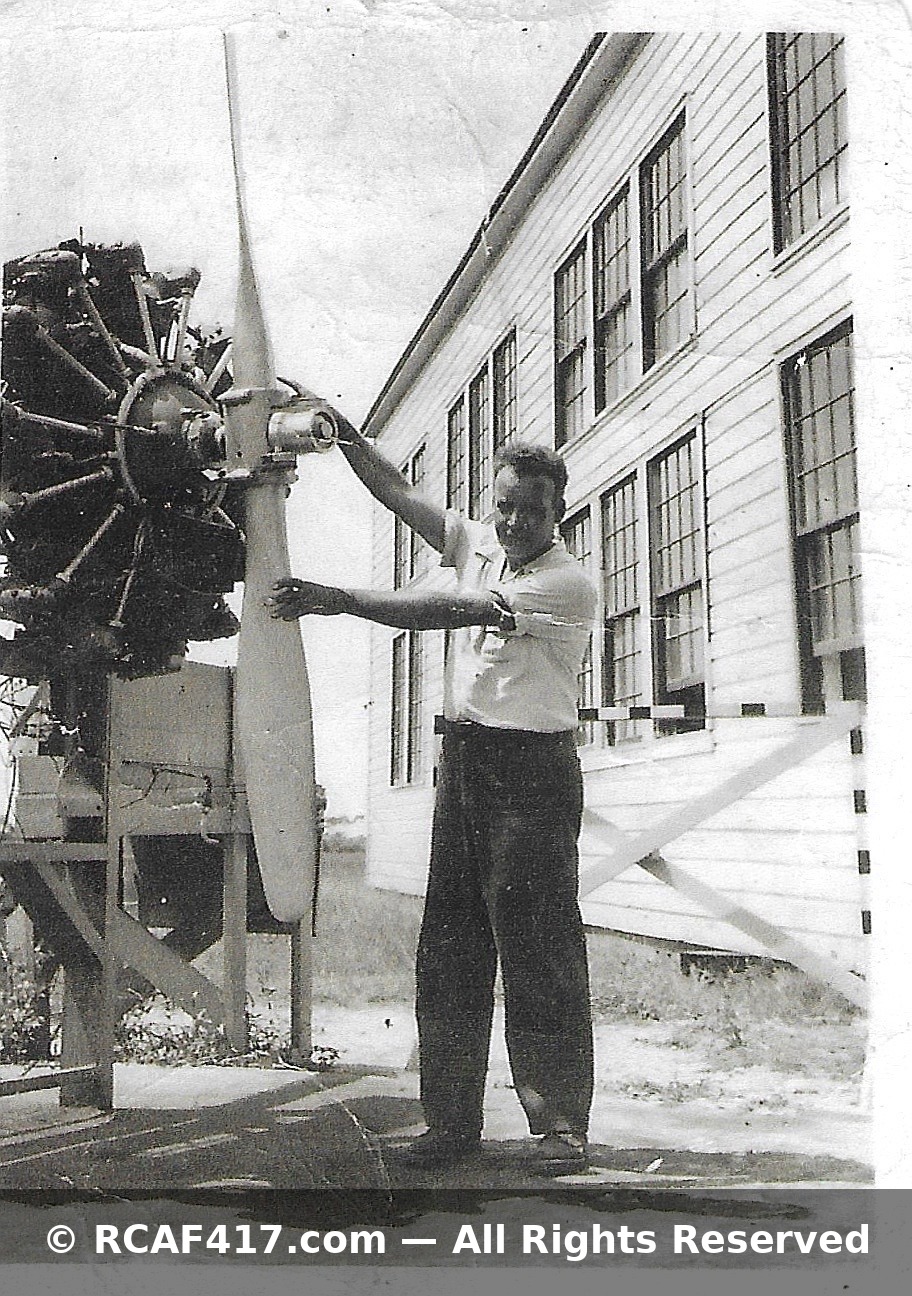
The next stretch of his career alternated between two companies. At Bendix Aviation, as a First Piece and Floor Inspector (February 1952 – May 1954, and again September 1962 – May 1963), he inspected first-run parts and assemblies for conformance to blueprint, verifying dimensional accuracy with micrometers, calipers, vernier height gauges, dial indicators, and other precision instruments. In between, at Curtiss-Wright Corporation as an Aircraft Engine Inspector (May 1954 – July 1962), he performed field and overhaul inspections of Curtiss-Wright engines, investigated reported failures, and helped troubleshoot marginal engines.
He then supervised aircraft maintenance at Page Airways (July 1963 – July 1965), coordinating mechanics, planning inspection schedules, and interpreting service changes, blueprints, and malfunction reports for the crews under him.
His career came full circle at Curtiss-Wright, where he returned in February 1966 as Senior Field Service Representative, a post he held until February 1968. In this role he served as technical advisor for Curtiss-Wright's R-1820, R-3350, and J65 aircraft engines — both reciprocating and gas turbine — providing technical assistance and instruction to military and civilian Department of Defense personnel, investigating performance reports, recommending corrective action for flight and service difficulties, and feeding his findings back into engine design recommendations.
Alongside this civilian career, Koplitz kept his ties to the military: he wasn't honorably discharged from the reserves until May 1958. He also held a Commercial Pilot license, a Ground Instructor rating, and an Airframe & Powerplant (A&P) Mechanic certificate — credentials that reflect the same range the RCAF history had noted in him years earlier, as comfortable teaching and inspecting as he was flying.
His education had prepared him for exactly this kind of work: St. Vincent's Grammar School and Madison High School in Madison, New Jersey, followed by Newark Academy in Newark, and a correspondence course in Aeronautical Engineering through the International Correspondence Schools (I.C.S.) — technical grounding that, combined with two and a half years of wartime flying and maintenance experience, carried him through more than two decades at the center of American aviation.